


Confined Space Entry Training
If you work in or around confined spaces, this in class training course is necessary. This course explains how to work in confined spaces and enclosed environments to maximize safety and those around you.
Workers who commonly need confined space entry safety training include firefighters, construction workers, maintenance technicians, building engineers, lab technicians, welders, pipeline workers, HVAC technicians, emergency response personnel, those working in general industry safety roles, and more.
The Confined Space Entry Training course is based on the OSHA 29 CFR 1910.146 permit-required confined space standards for General Industry.
Key features of our Confined Space Entry Training course:
- Based on the OSHA 29 CFR 1910.146 permit-required confined space standard
- Written by industry expert trainers
- Customized activities
- Get scenario-specific training
- 8-hour course
- Interactive course
Objectives of this course are for the student to:
- Understand the scope & application of OSHA’s various confined space entry standards
- Identify “Confined Spaces”, then determine if they are “Permit Required”
- Understand OSHA requirements for developing and maintaining a “Permit-required confined space entry program”
- Know responsibilities of entrants, attendants, entry supervisors, contractors
- Identify when you may utilize OSHA’s “Alternate Entry” and “Reclassification” procedures
- Understand the requirements for “Rescue & Emergency Services”
- Have a basic knowledge of the general use and limitations of related equipment
This course is given in class and will take up to 8 hours to complete with hands-on training.
Upon successful completion a certificate of completion will be provided.
Joint Health & Safety Committee (Occupational Health and Safety)
Joint Health & Safety Committee (Occupational Health and Safety) need to perform an annual evaluation. Use the link below to help you ensure your joint committee has met its legal obligations, and to evaluate its overall effectiveness.
Joint Health and Safety Committee Evaluation Tool
jhsc-evaluation-tool-docx-en
JH&S Committee and Workers Reps Training
The Workers Compensation Act requires employers to establish a Joint Health and Safety Committee, that regularly employs 20 or more (full or part-time) employees.
Many workplaces find that joint worker/employer safety and health committees are an excellent means of consultation within the organisation. These committees can help identify workplace health and safety responsibilities. They can establish positive attitudes, and assist the employer in reducing and or eliminating workplace injuries or diseases.
What joint committees and worker health and safety representatives do
The joint committee plays an important role in your occupational health and safety program, giving workers and employers a way to work together to identify and find solutions to workplace health and safety issues. The joint committee has the following specific duties and functions:
- Identify situations that may be unhealthy or unsafe for workers, and advise on effective systems for responding to those situations
- Consider, and promptly deal with complaints relating to the health and safety of workers
- Consult with workers and the employer on issues related to occupational health and safety, and the occupational environment
- Make recommendations to the employer and the workers for the improvement of the occupational health and safety, and the occupational environment of workers
- Make recommendations to the employer on educational programs promoting the health and safety of workers. Compliance with Part 3 of the Workers Compensation Act and the regulations, and to monitor their effectiveness
- Advise the employer on programs and policies required under the regulations for the workplace, and to monitor their effectiveness
- Advise the employer on proposed changes to the workplace. This is including significant proposed changes to equipment and machinery, or the work processes that may affect the health or safety of workers
- Ensure that accident investigations and regular inspections are carried out as required
- Participate in inspections, investigations and inquiries as provided in Part 3 of the Workers Compensation Act and Section 3 of the Regulation
In workplaces where a worker health and safety representative is required, the representative has the same duties and functions as a joint committee, to the extent practicable.
This program is typically scheduled for 8 hrs.

First Responder – Advanced First Aid (OFA L3) to Emergency Medical Responder Upgrade
If you currently hold certification in First Responder (FR) or equivalent such as Advanced First Aid (OFA L3), and are looking to continue your education?
The next level of care is the Emergency Medical Responder (EMR) course!
The EMR program provides the knowledge and skills necessary in an emergency. You learn how to help sustain life, reduce pain, and minimize the consequences of injury or sudden illness in a pre-hospital setting.
First Responder – Advanced First Aid (OFA L3) to Emergency Medical Responder Upgrade
This program is for those providing emergency response. These may include firefighters, law-enforcement officers, workplace responders, and emergency medical services (EMS) personnel. Includes Basic Life Support with Airway and Oxygen Management.
Canadian Red Cross First Responder to Emergency Medical Responder Upgrade course has been approved by the B.C. Emergency Medical Attendant Licensing Board (EMALB) for EMR licensing. This course includes BLS, AED, and Spinal Management.
Course content:
- Part 1 Preparing to Respond
- The Responder.
- The Emergency Scene.
- Preventing Disease Transmission.
- Part 2 Establishing Priorities of Care
-
- Anatomy and Physiology
 Practicing Nasal Pharyngeal Airway insertion
- Respiratory Emergencies.
- Airway and Ventilation.
- Circulatory Emergencies.
- Bleeding.
- Shock.
- Pharmacology.

Pharmacology
-
- Part 3 Traumatic Injuries
- Soft Tissue Injuries.
- Musculoskeletal Injuries.
- Head and Spine Injuries.
- Chest, Abdominal, and Pelvic Injuries.
- Part 4 Medical Emergencies
- Sudden Illnesses.
- Poisoning.
- Heat- and Cold-Related Emergencies.
- Part 5 Special Populations and Situations
- Special Populations and Crisis Intervention.
- Childbirth.
- Reaching and Moving Patients.

fore and aft lift carry
- Multiple Casualty Incidents.
- Transportation.
- Workplace.
- Prerequisites
- Students should have at least a First Responder with BLS within the last 2 years when entering into the FR to EMR Upgrade program. Please contact us if unclear about the right program or certification.
- Licensing
- Learners who have completed the EMR Program and have certified must license with the Emergency Medical Association Licensing Board. This is mandatory in order to work as an EMR in BC. Costs for the EMA EMR exam are approximately $450.
Learners have one year after their EMR class completion date to pass their licensing exams. Learners who miss the one year deadline to license, but you completed the EMR Program within three years? You must complete the EMR Renewal course before re-applying for licensure.
- Learners who have completed the EMR Program and have certified must license with the Emergency Medical Association Licensing Board. This is mandatory in order to work as an EMR in BC. Costs for the EMA EMR exam are approximately $450.
- To book your exam
The Emergency Medical Association governs licensing within the province of BC. To find more information on licensing or to schedule an exam, learners must contact EMALB directly by phoning 1.800.663.7867 or emailing getanexam@gov.bc.ca. - ***Materials***
All students must have a Professional Responder book or equivalent which is mandatory to take the course.
BC EMA EMR Licensing Practise session Abbotsford
EMA_Candidate_Examination_Handbook
This practice session is intended for those that want to freshen up on their skills and anyone that is getting ready for their BC EMA EMR Licensing exam.
There will be skills stations for sagar splint, rolls and scenarios will include both trauma and medical calls which includes a review of pharmacology.
To make sure we can take as much out of this practice as possible, we would require everyone to be on time. Please have your materials reviewed before coming to this practice session.
Please email us before the session of anything specific you would like to work on, so we can prepare for that. You can send your requests and any other questions to bep@be-prepared.ca
This program will be scheduled when needed to help accommodate upcoming session for BC EMA Licensing. Please contact us via email or our contact form
We have helped many students achieve success at their exams after coming for a practice session(s). We also allow former students to come and practise with any FR/EMR courses that we have running. This will help to keep your skills current.
Please check out upcoming programs: https://be-prepared.ca/courses-abbotsford-richmond/
If you re looking to actively apply skills learned, with or without your license, please email us. We are always looking for qualified help for upcoming first aid events.
Accident Simulation for Red Cross, WorkSafeBC or equivalent trained individuals
General Information
Accident Simulation for Red Cross, WorkSafeBC trained individuals. Be Prepared provides training for Accident Simulation (European style – L.O.T.U.S.)
For Who?
Accident Simulation for Red Cross, WorkSafeBC trained individuals. Anyone that is part of a Medical Response Team, running compliance scenarios, first aid competitions. Person(s) that organize mass casualty simulations.

Course Content
- First Aid knowledge
- Make up and use of props
- Scenario planning and safety
- Enactment of medical conditions
- Responding to treatment
Prerequisites
Current certification in any of the following programs/profession:
Advanced First Aid, First Responder, Emergency Medical Responder, Canadian Ski Patrol, Paramedic, Registered Nurse, Lifeguards (NLS/LSS). Equivalent programs will be considered as well after review of program.
Course duration
Wednesday Evening schedule to run from 6:30 PM until 9:30 PM. This will be 2.5 hrs of real practice time, for up to 40 hours class time. Start will be this Spring 2026, April 1st till end of June.
Only a small group will be allowed, to make sure enough attention is provided to any individual attending.
We can schedule this program any other time if we have enough people interested. Please use our contact form to ask what is available.
Please advise us of any allergies as a lot of different non staining, natural products will be used, including latex.
Course fee does not include all material costs, estimated extra costs around $75-$250. A small toolkit is recommended to keep all materials together. We will send out a list of recommended products to those that are interested to take the program.

Red Cross Emergency ChildCare with CPR-B
Red Cross Emergency ChildCare with CPR-B
- Includes CPR Level B with AED
For Who?
ECE teachers
Pre-school teachers
DayCare workers
Babysitters
New Parents
Grand Parents
Course Content Red Cross Emergency ChildCare with CPR-B
How to respond to emergencies and when to call 9-1-1/EMS.
Check, Call, Care.
Airway, Breathing and Circulation emergencies, including how to deal with Respiratory Emergencies and Cardiac Arrest.
What to do for and recognize head and spinal injuries.
How to care for Bone, Muscle and Joint Injuries.
Small wounds and how to care for them.
Sudden Medical Conditions like Diabetic and Seizures.
Heat and Cold Emergencies.
Poisons and how to Keep Children Safe.
Lots of hands-on practice throughout the day. There will be a variety of teaching methods used, making sure everyone is comfortable with the skills learned.
If you would have any questions relating to the Red Cross Emergency ChildCare with CPR-B, please fill in our contact form. We will be happy to answer as best we can.
We recommend anyone who takes this course, to take a look at the following videos and articles.
Some interesting (Red Cross) videos and articles about children and babies:
Red Cross video showing Baby CPR:
https://www.todaysparent.com/baby/how-to-do-infant-cpr/
Red Cross video showing what to do if a child is Choking:
https://www.todaysparent.com/baby/what-to-do-if-your-babys-choking/
We are happy to share an article that Jenn Miller has wrote.
It is about everything you need for your baby, according to science.
You will also find some good essential baby care tips. We believe that this will be great reading for first time parents.
https://www.jenreviews.com/best-baby-products/
***Why would you take your Red Cross course with Be Prepared? Please read about our company and passion, hope to see you at our next Red Cross Emergency ChildCare with CPR-B first aid course!***
To see our location in Abbotsford, please go to: https://be-prepared.ca/
Red Cross CPR-C AED (and CPR – recertification)
Red Cross CPR-C AED (and CPR – recertification)
General Information:
- 3-year certification
- 2024 Guidelines
- AED content and certification included

CPR Training (demo done by Troy)
Course Content
- The Red Cross
- The First Aiders Role
- Check, Call, Care
- Recovery Position
- Choking Adult
- Assisting with Medications
- Angina and Heart Attack
- Stroke
- CPR / AED Adult
- Deadly Bleeding / Shock
- Choking Child and Baby
- CPR / AED Child and Baby
This course does not include any First Aid. If First Aid with CPR is needed please click here and select which course you would like. There is the 1 day Emergency First Aid with CPR program, or you can take the 2 day Standard First Aid with CPR.
*** If you need another level of CPR or looking to recertifying another level of CPR, please let us know by using our contact form ***
***WHEN SCHEDULING YOUR RECERTIFICATION, PLEASE BRING PROOF OF CURRENT CERTIFICATE, IF TICKET HAS EXPIRED (EVEN FOR A DAY), PLEASE SCHEDULE FOR FULL COURSE!! – THESE ARE RED CROSS STANDARDS***
Upgrade your skills by taking CPR-BLS, Emergency First Aid or Standard First Aid with CPR-C
To learn more about our company and why you should take a course with Be Prepared, please click here.
We also custom make first aid kits, but sell all items individually through our shop at www.shop.be-prepared.ca no order is too small to be placed, no minimum needed.
Red Cross Basic/Emergency First Aid CPR Level C / AED
Red Cross Basic/Emergency First Aid CPR Level C / AED
General Information:
- Includes First Aid, Resuscitation, and Education Guidelines: 2024 Clinical and Education Updates for Canada.

Using the Red Cross App
- 3-year certification
- Includes CPR Level C and AED certification
Red Cross Basic/Emergency First Aid CPR Level C / AED
- How to respond to emergencies
- The EMS system
- The 3 key principles in First Aid – Check, Call, Care
- How to deal with
- Airway Emergencies like Choking for Babies, Children and Adults
- Breathing Emergencies, for example Asthma, Anaphylaxis
- Circulation Emergencies – Heart Attack, Stroke, Major Bleeds
- First Aid for Respiratory & Cardiac Arrest
- Recognizing shock and what to do
- Wound Care Management
Download the comprehensive First Aid booklet here!
***If another level of CPR is needed, just let the Instructor know at the beginning of class***
***WHEN SCHEDULING YOUR RECERTIFICATION, PLEASE BRING PROOF OF CURRENT CERTIFICATE, IF TICKET HAS EXPIRED (EVEN FOR A DAY), PLEASE SCHEDULE FOR FULL COURSE!! – THESE ARE RED CROSS STANDARDS***
You may qualify to do a re-certification for Basic/Emergency First Aid. If you think you may qualify, please send us an email by using our form: contact us
To see our new location and find out more about Be Prepared, please visit: https://be-prepared.ca/
Red Cross Intermediate/Standard First Aid CPR-C / AED and recert
- 14 – 16 hour course
- First Aid, Resuscitation, and Education Guidelines: 2024 Clinical and Education Updates for Canada. , 3-year certification
- Includes CPR Level C and AED certification
Red Cross Intermediate/Standard First Aid CPR-C / AED and recert Course content:
- How to respond to emergencies
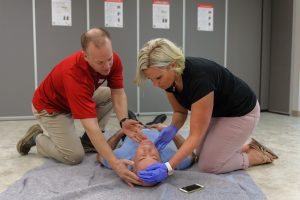
Opening an Airway
- The EMS system
- The 3 key principles in First Aid – Check, Call, Care
- How to deal with:
- Airway Emergencies
- Breathing & Circulation Emergencies
- Heart Attacks, Angina, Stroke
- First Aid for:
- Respiratory & Cardiac Arrest
- Head & Spine Injuries
- Bone, Muscle & Joint Injuries
- Wound Care
- How to deal with sudden medical conditions
- Heat related Emergencies, Cold Environmental emergencies
- Poisons
***Alternative option: BLENDED Intermediate/Standard First Aid – Part done online followed by 1 day classroom only***
When registering for the Blended SFA, you must complete the online portion prior to coming to class to receive a certificate. You will have to re-register for another course if not completed on time. Please bring proof (electronic or printed) of completion to class or email to us as soon as done no later then 1 day prior to class. Completion from online to classroom can not be longer then 6 weeks. Without proof we have to assume its not completed.
Looking for the full 2 day Intermediate/Standard First Aid course? Please contact us for group rate (8 minimal).
Download the comprehensive First Aid booklet here!
If you are looking for a re-certification program and wonder if you are qualifying for this course, please contact us
We also have first aid kits and equipment for sale on our shop page: www.shop.be-prepared.ca
***
Job Opportunity
When completed and certified in the Red Cross Intermediate/Standard First Aid with CPR-C / AED 14-16 hr, we would be very happy to have you join our list of qualified First Aiders to help out at community events. If new to providing first aid we will let you gain confidence by pairing you with an experienced First Aider, once comfortable we can send you out alone.
Most events are paid for – some will be partly volunteering. You will never be put on a site alone, so always a great opportunity to practice skills or feel more comfortable when dealing with real situation in public, work or at home.
Find out more about who we are: https://be-prepared.ca/about-be-prepared/
Please let us know if you want to be included in our list of qualified First Aiders by sending us your info using the contact us form.
***
***WHEN SCHEDULING YOUR RE-CERTIFICATION, Please provide proof (electronic or printed) of completion to class or email to us, no later then 1 day before class start. If your certificate has expired before taking the re-certification course you will have to register for a full/blended course. Without proof of current certification we have to assume your certificate has expired and will not be permitted to take the re-certification class.
Red Cross Marine Basic First Aid (Transport Canada TP13008E)
General Information
Meets Transport Canada Training Program Standards in Marine First Aid (Transport Canada TP 13008E)
- 16-hour course
- 3-year certification in Marine Basic First Aid & CPR Level C
- Includes AED certification (where local legislation permits)
- Red Cross First Aid & CPR Manual (see link below), certification card (electronic after class)
Overview of First Aid & CPR techniques with scenarios taken from the marine/fishing industry for individuals who need a basic training level in First Aid & CPR for the marine/fishing industry. The course covers skills needed to recognize and respond to cardiovascular emergencies for Adults, Children and Babies, CPR Level C, and other topics including choking, airway and breathing emergencies, and prevention of disease transmission. Also covers topics like rescue and transport of people, rescue in enclosed spaces, infectious diseases and personal health and hygiene.
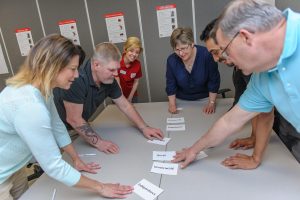
Exploring the 7 Fundamental Principles
Who should attend:
Any employee or those pursuing employment in the marine/fishing industry can attend this course. Please see dates below to sign up for the Red Cross Marine Basic First Aid (Transport Canada TP13008E)
For those needing more then the Marine Basic, we also offer the Red Cross Advanced Marine First Aid Program.
Prerequisites
Participants must have a Transport Canada issued Candidate Document Number (CDN).